
quels outils Web 2.0 pour les chefs de projet?

Il existe de nombreux outils de collaboration venant du Web 2.0 auxquels les chefs de projet trouveront une grande utilité.

collaborate 4Certains enrichiront des communications, accroîtront la capacité à joindre les contacts de l’équipe projet étendue, permettront de développer de manière collaborative et de stocker la documentation projet ou produit, supporteront la création de réseaux professionnels axés projet, faciliteront le brainstorming et amélioreront la productivité.

lire la suite…

Présentation en français sur les outils collaboratifs du WEB 2.0 dans le management de projet: http://www.slideshare.net/moperto/web-20-tools-for-project-managers

some useful web 2.0 tools for project managers

collaborate 4There are many collaboration tools coming with Web 2.0 that project managers will find usage for. Some will enrich communications, increase reach ability in the extended project team, develop and hold part of the project or product documentation, set up project related professional networks, facilitate brainstorming, and improve productivity.Some can be obtained for free, others for money. Your requirements for confidentiality and security will play a key role in your selection process. Read the full article…

why are Project Management certifications important? Les certifications de management de projet sont-elles importantes ?

diplomawhy are Project Management certifications important?

Beyond the value of the diploma in itself, I think that preparing a PM certification is very valuable for the Project Managers who accept this big challenge for the following reasons: http://blogs.orange-business.com/live/2009/10/why-are-project-management-certifications-important.html

Les certifications de management de projet sont-elles importantes ?

Voici, Une question qui m’a souvent été posée…

Au-delà de la valeur du diplôme, je pense que la préparation d’une certification en management de projet est très intéressante pour les Chefs de projet qui relèvent ce défi pour les raisons suivantes : http://blogs.orange-business.com/live-france/2009/10/les-certifications-de-management-de-projet-sont-elles-importantes.html

Pourriez-vous auditer mon projet svp ?

bad auditorCette demande vous semble-t-elle étrange ? Êtes-vous comme de nombreux PMs qui fuient les audits comme la grippe H1N1 ? Les considérez-vous comme une perte de temps au mieux et un assassin potentiel de projet dans les cas extrêmes ?

J’ai partagé ces « a priori » mais cela n’est pas une fatalité. Les audits sont utiles, peuvent être productifs et apporter des avantages réels à votre projet ainsi qu’à vous-même.

Je suggère de commencer par le début : qui a commandité l’audit ? Pourquoi ? Qui sont les auditeurs ? Quelle est l’objet précis de l’audit?

J’ai découvert à l’expérience qu’en répondant à la dernière de ces questions, c’est-à-dire la portée de l’audit, on répond souvent aux autres. En effet, une fois partagé et compris, l’objet mettra en évidence plusieurs secteurs d’investigation et de revue. Cela pourrait être les pratiques de management de projet, les dépenses, la qualité des livrables, la sécurité, l’état d’avancement, les détails du plan de projet ou une combinaison de ceux-ci et d’autres.

Avec un peu de réflexion et de discussion avec les auditeurs, cela devrait expliquer les raisons et identifier le commanditaire. Le type d’auditeurs vous recevez, internes ou cabinets de conseil externes, généralistes ou auditeurs spécialisés, en dit également long sur l’importance accordée à l’audit et son but.

keeping moneyPar exemple, pendant un projet de construction et déploiement de progiciel de gestion intégrée (PGI), nous avons eu un audit interne. Une fois compris que le focus était essentiellement de s’assurer que nous contrôlions correctement dépenses et risques, il fut facile pour l’équipe de fournir les évidences de ce que nous faisions dans ces domaines. Nous avons montré notre processus de suivi des dépenses, notre méthode de suivi des affectations, le journal des questions ouvertes et le registre des risques. Le responsable financier a été rassuré par les résultats de l’audit. De plus, les auditeurs nous ont aidés à aller plus loin dans notre management des risques en nous permettant d’organiser une session de revue et de brainstorming sur les risques avec le comité exécutif du projet.

La suggestion suivante est de comprendre le processus que les auditeurs prévoient de suivre. Il est en effet important de comprendre leur approche pour mieux préparer l’équipe à cet événement qu’ils peuvent initialement percevoir de manière négative. En général, cela commence par des entretiens avec des membres clefs de l’équipe et les commanditaires du projet, souvent précédés par des requêtes de documentation pour pré-analyse. L’étape suivante implique des entretiens additionnels pour entrer plus profondément dans des questions spécifiques.

Un exemple basé sur mon expérience personnelle est sur un projet informatique où nous avions rencontré de graves problèmes pendant le déploiement. En tant que PM junior, je n’avais ni l’expérience ni le charisme pour « manager » un auditeur (externe dans ce cas). Il est venu et a exécuté son show sans expliquer le pourquoi et le processus à qui que ce soit. Dès le départ, il a émis des commentaires négatifs. L’équipe est devenue très préoccupée et quelque peu défensive. Les personnes ont fourni tous les documents demandés, mais d’une façon peu structurée. Il n’y avait pas d’histoire d’ensemble pour mettre les données brutes dans leur contexte. L’audit a pris beaucoup de temps et était très stressant pour tous. Au bout du compte, le rapport n’a pas aidé le projet à traverser cette période difficile. Dans ce cas spécifique, un audit, qui pouvait apporter la valeur, n’a réussi qu’à tuer un projet. Je garde encore un souvenir déplaisant de cette expérience certes utile mais par trop douloureuse.

meeting 2Vous devriez aussi prendre en compte le fait que les auditeurs feront certainement des points de suivi avec la direction et les commanditaires. Ils partageront leur état avancement à ces sessions, exposeront leurs découvertes, testeront leurs idées initiales (pour voir les réactions potentielles) et, plus tard, ils présenteront leurs recommandations (intermédiaires puis finales).

L’année dernière, je fus nommé leader pour l’audit d’une application interne. Comme j’avais été plusieurs fois du coté de l’audité, j’ai placé une attention particulière à expliquer les jalons et l’approche de l’audit. Nous avons discuté du périmètre proposé et de qui ferait quoi. Nous avons partagé nos observations au fur et à mesure avec l’équipe pour éviter les surprises. Nous leur avons donné l’occasion de faire des remarques (ce qu’ils ont fait et nous les avons prises en considération). Nous avons partagé nos recommandations avec l’équipe de projet avant de le faire avec la direction. Nous avons aussi aidé à définir et mettre en place un plan d’action pour adresser les points identifiés. Nous avons même ensuite (après l’audit) assuré un suivi de l’exécution de ces plans d’action. Cela, je suis certain, fut beaucoup plus bénéfique à la société qu’un simple rapport.

Indépendamment du scénario, le point clé pour le PM est de supporter activement les auditeurs pendant leurs investigations. Nous devons leur fournir toutes les informations appropriées en totale transparence et demander à nos membres de l’équipe projet de faire de même. Nous nous attacherons aussi à dégager du temps pour eux dans nos agendas surchargés. Nous voulons être des partenaires positifs et de valeur. En agissant ainsi, nous pouvons espérer gagner le privilège d’être impliqués dans la préparation des documents et sessions pour la direction. Ce peut être limité à valider la justesse des faits rapportés et ceci est déjà très utile. Ce peut être de comprendre ce qu’ils vont mettre en évidence et même de discuter certaines de leurs recommandations intermédiaires.

Dans mon rôle de PM, si les auditeurs me demandent mes attentes de l’audit, je mets en évidence 2 points majeurs :

  1. Obtenir des recommandations de valeur pour améliorer le projet
  2. Équité envers les membres de l’équipe.

L’étape suivante est l’achèvement de l’audit et de la production des recommandations. Inévitablement, il y en aura certaines avec lesquelles vous êtes d’accord ou que vous pouvez comprendre. Il y aura d’autres qui seront plus difficiles à accepter. Dans tous les cas, il est absolument critique de rester positif et ouvert. Passer en mode défensif n’aiderait en rien. De plus, gardez à l’esprit que les recommandations des consultants et auditeurs sont une chose; le choix des recommandations sur lesquelles la direction décidera d’agir est une autre affaire (bien plus critique pour vous et votre projet).

Dès que vous comprenez quelles actions correctives ou d’amélioration sont retenues, partagez celles-ci avec l’équipe projet de manière positive. Il est fréquent que le rapport complet des auditeurs ne soit pas diffusé. Seuls les points principaux des rapports sont présentés. Ceux qui engagent l’équipe sur des actions productives.

En conclusion, je suggère que, si votre projet n’est pas encore audité, vous considériez quels domaines pourraient être améliorés par un conseil externe et sollicitiez un audit sur ceux-ci : Demandez de l’aide avant que quelqu’un au-dessus de vous ne décide que vous avez besoin d’être aidés.

external eyeSur de nombreux projets, vous constaterez que les auditeurs vous aideront énormément à améliorer certains aspects comme le contrôle du périmètre, la rigueur dans la gestion des demandes de changement ou l’engagement de vos sponsors dans le management des risques. Les auditeurs portent un œil externe sur votre projet et sont donc bien plus objectifs que vous ne pouvez l’être.

Auditez mon projet !

Cette injonction vous semble-t-elle étrange ? Êtes-vous comme de nombreux PMs qui fuient les audits comme la grippe H1N1 ? Les considérez-vous comme une perte de temps au mieux et un assassin potentiel de projet dans les cas extrêmes ?

J’ai partagé ces « a priori » mais cela n’est pas une fatalité. Les audits sont utiles, peuvent être productifs et apporter des avantages réels à votre projet ainsi qu’à vous-même.

Je suggère de commencer par le début : qui a commandité l’audit ? Pourquoi ? Qui sont les auditeurs ? Quelle est l’objet précis de l’audit?

J’ai découvert à l’expérience qu’en répondant à la dernière de ces questions, c’est-à-dire la portée de l’audit, on répond souvent aux autres. En effet, une fois partagé et compris, l’objet mettra en évidence plusieurs secteurs d’investigation et de revue. Cela pourrait être les pratiques de management de projet, les dépenses, la qualité des livrables, la sécurité, l’état d’avancement, les détails du plan de projet ou une combinaison de ceux-ci et d’autres.

Avec un peu de réflexion et de discussion avec les auditeurs, cela devrait expliquer les raisons et identifier le commanditaire. Le type d’auditeurs vous recevez, internes ou cabinets de conseil externes, généralistes ou auditeurs spécialisés, en dit également long sur l’importance accordée à l’audit et son but.

Par exemple, pendant un projet de construction et déploiement de progiciel de gestion intégrée (PGI), nous avons eu un audit interne. Une fois compris que le focus était essentiellement de s’assurer que nous contrôlions correctement dépenses et risques, il fut facile pour l’équipe de fournir les évidences de ce que nous faisions dans ces domaines. Nous avons montré notre processus de suivi des dépenses, notre méthode de suivi des affectations, le journal des questions ouvertes et le registre des risques. Le responsable financier a été rassuré par les résultats de l’audit. De plus, les auditeurs nous ont aidés à aller plus loin dans notre management des risques en nous permettant d’organiser une session de revue et de brainstorming sur les risques avec le comité exécutif du projet.

La suggestion suivante est de comprendre le processus que les auditeurs prévoient de suivre. Il est en effet important de comprendre leur approche pour mieux préparer l’équipe à cet événement qu’ils peuvent initialement percevoir de manière négative. En général, cela commence par des entretiens avec des membres clefs de l’équipe et les commanditaires du projet, souvent précédés par des requêtes de documentation pour pré-analyse. L’étape suivante implique des entretiens additionnels pour entrer plus profondément dans des questions spécifiques.

Un exemple basé sur mon expérience personnelle est sur un projet informatique où nous avions rencontré de graves problèmes pendant le déploiement. En tant que PM junior, je n’avais pas l’expérience ni le charisme pour « manager » l’auditeur (un externe dans ce cas). Il est venu et a exécuté son show sans expliquer le pourquoi et le processus à qui que ce soit. Dès le départ, il a émis des commentaires négatifs. L’équipe est devenue très préoccupée et quelque peu défensive. Les personnes ont fourni tous les documents demandés, mais d’une façon peu structurée. Il n’y avait pas d’histoire d’ensemble pour mettre les données brutes dans leur contexte. L’audit a pris beaucoup de temps et était très stressant pour tous. Au bout du compte, le rapport n’a pas aidé le projet à traverser cette période difficile. Dans ce cas spécifique, un audit, qui pouvait apporter la valeur, n’a réussi qu’à tuer un projet. Je garde encore un souvenir déplaisant de cette expérience certes utile mais par trop douloureuse.

Vous devriez aussi prendre en compte le fait que les auditeurs feront certainement des points de suivi avec la direction et les commanditaires. Ils partageront leur état avancement à ces sessions, exposeront leurs découvertes, testeront leurs idées initiales (pour voir les réactions potentielles) et, plus tard, ils présenteront leurs recommandations (intermédiaires puis finales).

L’année dernière, j’étais nommé leader pour l’audit d’une application interne. Comme j’avais été plusieurs fois du coté de l’audité, j’ai placé une attention particulière à expliquer les jalons et l’approche de l’audit. Nous avons discuté du périmètre proposé et de qui ferait quoi. Nous avons partagé nos observations au fur et à mesure avec l’équipe pour éviter les surprises. Nous leur avons donné l’occasion de faire des remarques (ce qu’ils ont fait et nous les avons prises en considération). Nous avons partagé nos recommandations avec l’équipe de projet avant de le faire avec la direction. Nous avons aussi aidé à définir et mettre en place un plan d’action pour adresser les points identifiés. Nous avons même ensuite (après l’audit) assuré un suivi de l’exécution de ces plans d’action. Cela, je suis certain, fut beaucoup plus bénéfique à la société qu’un simple rapport.

Indépendamment du scénario, le point clé pour le PM est de supporter activement les auditeurs pendant leurs investigations. Nous devons leur fournir toutes les informations appropriées en totale transparence et demander à nos membres de l’équipe projet de faire de même. Nous nous attacherons aussi à dégager du temps pour eux dans nos agendas surchargés. Nous voulons être des partenaires positifs et de valeur. En agissant ainsi, nous pouvons espérer gagner le privilège d’être impliqués dans la préparation des documents et sessions pour la direction. Ce peut être limité à valider la justesse des faits rapportés et ceci est déjà très utile. Ce peut être de comprendre ce qu’ils vont mettre en évidence et même de discuter certaines de leurs recommandations intermédiaires.

Dans mon rôle de PM, si les auditeurs me demandent mes attentes de l’audit, je mets en évidence 2 points majeurs :

1. Obtenir des recommandations de valeur pour améliorer le projet

2. Équité envers les membres de l’équipe.

L’étape suivante est l’achèvement de l’audit et de la production des recommandations. Inévitablement, il y en aura certaines avec lesquelles vous êtes d’accord ou que vous pouvez comprendre. Il y aura d’autres qui seront plus difficiles à accepter. Dans tous les cas, il est absolument critique de rester positif et ouvert. Passer en mode défensif n’aiderait en rien. De plus, gardez à l’esprit que les recommandations des consultants et auditeurs sont une chose; le choix des recommandations sur lesquelles la direction décidera d’agir est une autre affaire (bien plus critique pour vous et votre projet).

Dès que vous comprenez quelles actions correctives ou d’amélioration sont retenues, partagez celles-ci avec l’équipe projet de manière positive. Il est fréquent que le rapport complet des auditeurs ne soit pas diffusé. Seuls les points principaux des rapports sont présentés. Ceux qui engagent l’équipe sur des actions productives.

En conclusion, je suggère que, si votre projet n’est pas encore audité, vous considériez quels domaines pourraient être améliorés par un conseil externe et sollicitiez un audit sur ceux-ci : Demandez de l’aide avant que quelqu’un au-dessus de vous ne décide que vous avez besoin d’être aidés.

Sur de nombreux projets, vous constaterez que les auditeurs vous aideront énormément à améliorer certains aspects comme le contrôle du périmètre, la rigueur dans la gestion des demandes de changement ou l’engagement de vos sponsors dans le management des risques. Les auditeurs portent un œil externe sur votre projet et sont donc bien plus objectifs que vous ne pouvez l’être.

I want my project to be audited!

bad auditorDoes this title sound odd to you? Are you like many PMs trying to escape audits as much as possible? Do you consider them as a waste of time at best and a potential killer in extreme cases?

I did also share these feelings but it does not need to be this way. Audits are very worthwhile, and can be productive and of real benefit to you and your project.

I suggest starting from the inception: who has requested the audit? why? who are the auditors? what is the scope?

I found with experience that finding the answer to the latter of these questions, i.e. scope of the audit, will often shed light on the others. Indeed, once shared and understood, the scope will highlight several areas of investigations and review. It could be the project management practice, the costs, the quality of deliverables, the security, the progress against schedule, the details of the project plan or any combination of these and more.

With a little bit of thinking and discussions with the auditors, it should become clear why this audit and who has requested it. Also, the type of auditors you get, internal versus external, large consulting firms versus specialized players, will tell a lot about the importance granted to the audit and its aim.

0002For example, we were audited during an Enterprise Resource Planning (ERP) system construction and deployment. It was an internal audit. Once we understood that the focus was essentially to ensure that we were in control of project spend and managing the risks correctly, it was easy for the team to provide clear evidence of what we were doing in these areas. We showed our expenses tracking process, time tracking method, issues log and risk register. The Chief Finance Officer was reassured by the findings. Additionally, the auditors helped us to further highlight our top risks to the steering committee during a specific risk management brainstorming and review session with them.

Next suggestion is to learn about the process that the auditors plan to follow. It’s important to understand their approach to better prepare the team for this event that they may initially perceive negatively. Usually, it starts with a few interviews of key project team members and stakeholders, eventually preceded by some documentation request and analysis. The next step often involves further interviews to deep dive into specific areas.

An experience I had about the importance of the above was on a IT project where we were in deep trouble during deployment. As a young PM, I did not have the experience or clout to « manage » the auditor (an external one in this instance). He came in and ran his show without explaining the process to anybody. He made negative comments quite early on. The team became very concerned and somewhat defensive. People provided all materials requested but in a rather unstructured way. There was no overall framework/story around the raw data. The audit took long and was very frustrating for all. In the end, the report did not help the project through its difficult times. In this specific instance, an audit, that could have brought value, ended up killing the project and I still have bad feelings about this useful but painful experience.

meetingYou should also consider that the auditors will most certainly have some checkpoints with management and audit sponsors. They will share their progress at these sessions, expose findings, test the water on initial ideas (to see potential reactions), and at a later stage present recommendations (draft and final).

Last year, I was the lead for the audit of an internal application. As I had been several times on the receiving end of audits, I placed specific focus in this instance on explaining the milestones and approach for the audit. We explained the scope and who would do what. We shared the findings with the team as they became available to avoid surprises. We gave them the opportunity to comment (which they did and we took their input into account). checklistWe shared our recommendations with the project team before management and also helped define and put in place action plans to address the identified issues. We even followed up after the audit on execution of these action plans. This, I am sure, was much more beneficial to the company than a one-off report.

Whatever the scenario, the key for the PM is to actively support the auditors throughout their investigations. We shall provide all relevant information in full transparency and ask our team members to do the same. We shall also make time for them in our busy agendas. We want to be valuable and positive contributors. As we do so, we may gain the privilege to be involved in the preparation of the documents and sessions for management. It could be limited to validate the correctness of facts but that is already very worthwhile. It could be to understand what they will highlight up to discussing some of their draft recommendations.

In my PM role, when asked by the auditors about my expectations of the audit, I highlight 2 items:

  1. Get valuable recommendations to improve the project
  2. Fairness towards team members.

Next stage is when the audit reaches completion and produces its recommendations. Unavoidably, there will be some you agree with or can understand. There will be others that are tougher to accept. In any case, it is absolutely critical to remain positive and open. Moving into defensive mode will never help. Also, keep in mind that  consultants/auditors recommendations are one thing; which of these recommendations management will decide to act upon is something else (that is more critical to you and your project) .

As soon as you understand which corrective or improvement actions are retained, share these with the team in a positive manner. In my experience, it is often the case that the auditors report is not shared; only highlights of the reports are presented that foster the team towards productive actions.

external eyeAs a conclusion, I suggest that if your project is not yet being audited, you consider which areas could be improved using external advice and eventually solicit an audit on these: Get help before someone above you decides that you need to be helped.

On many projects, you will find that auditors will greatly help you to firm up some aspects such as scope control, change management rigor or raising the involvement of your project sponsors in risk mitigation. They look at your project with an external and therefore more objective than you ever can be.

Comment le PM devrait-il gérer un dominateur pendant une réunion d’équipe ?

Article original en Anglais:

http://www.projectmanagers.net/profiles/blogs/how-should-the-pm-handle-a by Dana Pigford Brownlee

Que Faire Quand Quelqu’un Domine la Discussion ?

dominateurLe Problème :

Chacun a eu l’occasion de rencontrer “le Dominateur”. C’est la personne dans le groupe qui semble s’accaparer la discussion. Parfois ce sont des bavards trop ardents…d’autres fois ce sont des personnalités excessivement agressives absorbant tout l’oxygène de la pièce. Malheureusement, parfois ils semblent parler au nom des autres et ne les laisseront pas exprimer leurs avis ou idées. En tant que facilitateurs, on attend de nous que nous créions et supportions un environnement inclusif et sûr où des idées diverses peuvent être exprimées. Mais quand vous êtes face à un dominateur (ou deux!!), que faire ? ? ?

Essayez ces techniques.

  • Remerciez le dominateur pour ses réactions et demandez l’apport des autres (par exemple “Stéphane, c’est une idée intéressante. Voyons si d’autres ont également des suggestions.”)
  • Réitérez le commentaire du dominateur, écrivez-le visiblement pour que tous puissent le voir, et demandez ensuite d’autres idées afin de compléter la liste. (Par exemple “Stéphane, il semble que vous recommandiez que nous utilisions ces trois vendeurs en tant que liste des vendeurs retenus…est-ce correct ? C’est une excellente suggestion. Compilons une liste de plusieurs suggestions, puis discutons-les toutes. Nous inscrirons votre suggestion comme numéro 1 dans la liste. Je voudrais obtenir au moins trois autres suggestions de l’équipe. Que pensent les autres ?”)
  • post itAu lieu de demander au groupe de répondre à une question oralement, demandez leur plutôt de prendre 2 minutes pour noter leur idée, question, ou recommandations sur un Post-It. Demandez alors à chaque personne de partager l’un des commentaires qu’ils ont écrits.
  • Suggérez que le groupe utilise la technique du tour de table (faire un tour de la table en demandant à chaque personne partager un commentaire) et démarrez du coté de la table qui est à l’opposé du dominateur (par exemple “c’est une question si importante que je veux être sûr d’obtenir des idées de chacun. Faisons un rapide tour de table en commençant avec Gilles…”)
  • Adressez-vous directement à quelques personnes qui n’ont rien dit (par exemple “Michel, quelles sont vos idées sur cette question ?”)
  • Faites une pause et sollicitez en aparté le support du dominateur (“Stéphanie, vous avez amené plusieurs points clefs. J’aimerais impliquer plusieurs autres membres de l’équipe dans la discussion pour entendre leurs idées. Quelques membres du groupe ne sont pas aussi affirmés, mais je voudrais être sûr que nous les entendions.”)
  • Cassez le groupe en paires ou trios et laissez-les discuter une question dans ces groupes plus petits avant d’entamer une discussion du groupe
  • Obtenez l’accord de votre équipe pour utiliser un objet physique (par exemple une éponge comme un ballon) pour équilibrer la discussion. La personne tenant le ballon s’exprime puis doit passer le ballon quelqu’un d’autre une fois qu’ils ont fini leur point.Pour plus d’astuces et techniques, visitez Www.meetinggenie.com

Project Management is a Service / Le Management de Projet est un Service

5There are Five Dimensions of Service that Project Managers should keep in mind as they provide project management services to their customers and teams.

Let’s start with a simple question: why do customers switch?

http://blogs.orange-business.com/live/2009/10/project-management-is-a-service-business.html

en Français:

http://blogs.orange-business.com/live-france/2009/10/le-management-de-projet-est-du-service.html

La méthode de la chaîne critique ou théorie des contraintes

shovel-readyLa méthode de la chaîne critique ou théorie des contraintes élaborée dans l’industrie mérite que nous nous y intéressions de très près en management de projet !

Article complet sur Orange Business Live :

http://blogs.orange-business.com/live-france/2009/10/quest-ce-que-la-methode-de-la-chaine-critique-en-management-de-projet.html

Une approche vers la certification des chefs de Projet et directeurs de Programme

J’entends de différentes sociétés “nous ne sommes pas très bons en management de projet …”

…mais n’obtiennent pas ce qu’ils méritent compte tenu de l’attention (ou du manque d’attention) qu’ils dédient à cette difficile profession?

En effet, la profession de Management de Projet doit être :

1. Managée : avec une trajectoire d’évolution définis, les partages de meilleures pratiques et la formation

  • Centre d’Excellence en management de projet  / Meilleures pratiques
  • PMO pour développer et améliorer les méthodes
  • curriculum de formations spécifiques
  • Approche de certification globale (externe et interne)

2. Facilitée et animée : une communauté de Chefs de projet

  • Un leader pour la profession de PM au niveau de l’entreprise et dans chaque entité majeure de l’entreprise
  • Leaders locaux / facilitateurs (partie intégrante du mécanisme de certification)
  • Les coach pour des PM juniors (débutants et plus confimés)
  • Conseils de Certification internes réguliers
  • Jours de mise en valeur du Management de Projet
  • Gestion des connaissances et outils de collaboration (wikis, forum, partage de document, réutilisation)
  • Programme de reconnaissance pour la profession

Pourquoi les sociétés qui se plaignent du management de Projet et de Programme n’adopteraient pas ce que font les meilleures : implémenter une structure de développement professionnelle claire pour les PMs.

Un modèle clair et simple supporté par des certifications externes et/ou internes et avec des outils de collaboration appropriés et du coaching au sein de la société ?

Par exemple, ils pourraient mettre en œuvre 4 niveaux d’expertise de PMs correspondant à des niveaux définis de projets (budget, taille, durée, importance stratégique …) : j’ai proposé Associé PM, PM, Senior PM et le Exécutif PM dans le dessin ci-dessous. C’est une structure simple où l’on se déplace d’un niveau au suivant via des certifications, des examens ou revues de pairs. Il doit être baigné dans un environnement collaboratif où les PMs peuvent partager des documents, apprendre de projets antérieurs et obtenir la formation et le conseil de pairs et d’experts via des forum ou wikis par exemple.

000Le susdit est dans l’intérêt de la compagnie …

1. Les risques sont gérés plus efficacement

  • Définition précise des projets
  • Gouvernance appropriée
  • Risques identifiés et gérés activement

2. Augmentations de productivité

  • Définition claire des rôles, responsabilités et produits à livrer
  • PMs certifiés
  • Réalisations plus rapide à l’aide de la gestion des connaissances

3. La communication devient plus facile

  • Terminologie, méthodologie et indicateurs de performance communs
  • transparence vis-à-vis du client et satisfaction du client
  • Des plans, programmes, performance actuelle par rapport aux objectifs et engagements

Et c’est aussi dans l’intérêt du Chef de projet, du Directeur de Programme…

Pour une profession riche et variée

  • Des compétences techniques, finances, contractuelles, compétences relationnelles
  • Large gamme d’environnements et de rôles, diversité dans projets

Des emplois qui apportent une énorme valeur ajoutée pour la société et ses clients

  • Le PM est la personne responsable suprême pour le projet
  • Projets de quelques centaines de kilos € à plusieurs dizaines de millions d’Euros

Le PM se développe avec l’expérience

  • Dans la profession de PM avec de plus grands projets, des programmes stratégiques …
  • Vers d’autres professions (consultants, projets clients versus internes, responsable de compte client…)
  • Vers la profession de manager

Avez-vous une expérience d’exécution d’une telle approche dans votre société ?

Écrivez-moi ou laissez un commentaire.

An approach towards Project / Programme Managers certification

I hear from different companies « we’re not very good at Project Management… »

…but aren’t they getting what they deserve for the (lack of) attention they’re dedicating to this difficult profession?

Indeed, the PM profession needs to be:

1. managed: defined certification path, best practices and training

  • Project Management Center Of Excellence / Best practices
  • PMO to develop and improve methods
  • specific training curriculum
  • Worldwide certification approach (external and internal)

2. facilitated and animated: a community of Project Managers

  • a leader for the PM profession at company level and in each major entity of the company
  • local leaders / facilitators (part of certification board)
  • coaches for junior PMs (associate and PMs)
  • regular internal Certification Boards
  • PM Days
  • knowledge management and collaboration tools (wikis, forums, document sharing, reuse
  • reward programme for the profession

why wouldn’t these companies complaining about Project and Programme management implement what some of the best have done : a clear professional development framework for Project Managers.

A clear and simple model supported by external certification and/or internal ones, and with proper collaboration tools and coaching in place within the company?

For example, they could implement 4 levels of PM expertise corresponding within the company to clearly defined levels of projects (budget, size, durations, strategic importance…): I named these Associate PM, PM, Senior PM and Executive PM in the drawing below. It is a simple  framework where moving from one level to the next happens via certifications, exams or board reviews. It needs to be accompanied all along by a collaborative electronic environment where PMs can share documents, learn from prior projects and get coaching and advice from peers and experts via forums or wikis for example.

000

the above is in the best interest of the company…

1. risks are managed more effectively

  • proper definition of projects
  • proper governance
  • identified and proactively managed risks

2. productivity increases

  • clear definition of roles, responsibilities and deliverables
  • empowered PMs
  • faster launch through the use of knowledge management

3. communication becomes easier

  • common terminology, methodology and performance indicators
  • customer visibility and satisfaction
  • of plans, schedule, actual performance against objectives and commitments

and also, it is in the best interest of Project Manager, Programme Manager, Project Director…

for a rich and wide profession

  • technical competencies, finance, contractual, soft skills
  • broad range of environments and roles, diversity in projects

with jobs that carry tremendous value add for the company and its customers

  • the PM is the ultimate responsible person for the project
  • projects ranging from a few hundred K€ to several dozens million Euros

the PM evolves with experience

  • within the PM profession with larger projects, strategic programmes…
  • towards other professions (consultants, external versus internal customer projects, customer account management…)
  • towards the management profession

Do you have any experience with implementing such a framework in your company?   Please drop me a note or leave a comment.

deliver on time with the critical chain aka « theory of constraints »

weak linkThe method of the critical chain or « theory of constraints » is coming from manufacturing and I believe it deserves very close attention. At PMI France Sud, I attended a presentation of Eric Robien on this approach and how it applies to project management and I found it quite interesting.

I am wondering if any of you are already using it, how and with what results?

I summarized what I understood at: http://blogs.orange-business.com/live/2009/10/what-is-the-critical-chain-or-theory-of-constraints-in-project-management.html

quels outils pour le travail en équipe? sur pmi.org

collaborate

Comme décrit sur PMI.ORG, avant que votre organisation se décide pour un ou plusieurs des outils collaboratifs, assurez-vous que:

  • vous avez bien défini quel type de relationnel vous souhaitez faciliter: Est-ce entre employés travaillant sur un même site ou fuseau horaire, ou bien aux antipodes?
  • vous avez recherché les goulots d’étranglement dans la communication. Où des améliorations peuvent-elles être réalisées et facilitées par un outil?
  • vous avez identifiés les fonctions à améliorer. Par exemple, le management de projet, le brainstorming ou la planification?
  • vous avez établi le niveau de sophistication (et de coûts) recherché. Un logiciel gratuit suffira-t-il ou avez-vous besoin d’un outil plus puissant?

Lisez l’article complet sur: http://www.pmi.org/Pages/Tools-for-Teamwork.aspx

what tools for teamwork? on pmi.org

collaborate

As explained by PMI.ORG, before your organization settles on one of the many collaboration tools available, be sure to:

  • Consider what relationship you’re facilitating. Is it between employees who work in the same office or time zone—or on opposite sides of the world?
  • Look for communication bottlenecks. Where can improvements be made and how can a collaboration tool support that?
  • Define what function the tools will serve. Is it to facilitate project management, brainstorming or scheduling?
  • Decide on your sophistication (and cost) needs. Will a free version suffice or do you need a more powerful tool?

Read the full article at: http://www.pmi.org/Pages/Tools-for-Teamwork.aspx

make a real impact in your company/organization: take a lead role in its continuous transformation

leader 2I’d like in this post to explain why I believe that, as Programme/Project directors or Projects Portfolio Managers (I’ll use the PMs abbreviation in the rest of the article), we are ideally skilled to become transformation leaders in our companies and organizations.

PMs are used to run projects to launch new products, services and systems, and create unique customer deliverables. Most of these introduce changes in processes, organizations and people behaviors. We know from experience how to structure a complex programme or a portfolio of projects, collect individual project data, analyze it, organize it, clarify and confirm deliverables, timelines and ownership. We’re also able to validate and take commitments for an entire programme or project. We often have to build and effectively communicate simple and powerful messages to management, customers and team members. So, I propose that we make a step forward and evolve from change agents on a specific project to transformation leaders for an entire portfolio of transformation initiatives at organization or company level.

Introduction

You’ve most probably already been engaged in transformation and continuous improvement programmes in your professional or personal life. I have experienced many of these and I’ll mention some as we go along in order to put the talk into perspective.

  • Kaizen is a Japanese word referring to a philosophy focusing on continuous improvement. When applied to the workplace, kaizen typically refers to activities that continually improve all functions of a business.
  • continuous improvementsContinuous Improvement Process (CIP, or CI) is a management process  whereby company processes are constantly evaluated and improved in the light of their efficiency, effectiveness and flexibility.
  • Reengineering or Business process reengineering (BPR) is an approach aiming at improvements by increased efficiency and effectiveness of end to end business processes by a full review and rethink of these from A to Z.
  • Rebranding and more specifically Corporate Rebranding is the process by which a company is marketed or distributed with a different identity. This may involve radical changes to the logo, name, image, marketing and advertising. It often includes real desire of cultural changes of the company being rebranded.

Current pitfalls and issues experienced

  • Kaizen and Continuous improvement approaches: I have always liked these incremental approaches where people doing the job constantly try improve the way things are done. kaizenThe very name of this blog, DantotsuPM, is about constantly thriving to improve our PM skills. One of the main issues with incremental and continuous improvements is that the better you conduct them, the less visible they are. I mean that when you manage these changes really well: you will have prepared the organization, gradually introduced changes and followed up to ensure they are functioning properly… Your greatest testimony of success is when people think of these changes as natural evolutions rather than revolutions. But how can we get proper management attention and funding for something that seems so natural that it has become « almost » invisible?
  • Reengineering: In the 1990s, many authors wrote on this topic. The most famous I can recall (as they were often quoted in the company I worked for at the time) were Michael Hammer and James A. Champy with their famous book « Reengineering the Corporation ». It did cost our company a leg and an arm to try to follow their precepts and reengineer from A to Z our Order to Cash chain of processes and systems with mixed results. On one side, it certainly helped to bring all IT and Business/Process experts together and force the revisiting of all processes in this chain. These processes had been created years ago and a refresh was more than welcome. return on investment However, if you calculate the cost per order (say over 5 to 7 years of lifetime of the reengineered solution) of all investments and expenses, you will find that it added a very significant amount to each and every order (over one hundred Euros in some business cases I reviewed). Therefore, one could say that it reduced our price competitiveness (or decreased our margins) on each order for several years. Of course, this is to be tempered by the cost of doing nothing (if the company had not engaged on this massive reengineering programme). And, the success rate of such initiatives remains quite low. So, what is the true Return of Investment of such and undertaking?

marque

  • Rebranding: This is also one area I had a chance to actively contribute to. It was a wonderful, motivating and challenging experience. We managed to merge multiple brands in our companies portfolio into a single one. It increased its power and its impact. It clarified the messages and also reduced overall marketing and advertising costs. So, it certainly brought most of the rewards the company was expecting. The one place where I think we could have done better is on the culture behind the brand, especially its meaning and values for the employees and management of the company. We had a great start with 8 core values well articulated that we spent time to explain and discuss with all. However, past the Rebranding initial big push, we did not hammer these values to really make them become part of our DNA. I trust that a few years later, most managers and employees would be challenged to list these 8 core values from memory. An important aspect of transformation programmes is that they take long to bed in.

Some of the key pitfalls I have witnesses with the above examples and others are:

  • directionsNebulous Objectives and Goals: Some Business Process Reengineering initiatives were driven as IT programmes often called Order to Bill, Customer Relationship Management, or Enterprise Resource Planning. The focus was more on the tools than the business processes transformation required. The risk in this situation is that what we are really trying to achieve from a business stand point gets lost in techie world.
  • Never ending or unclear timelines and deliverables: humongous programmes, multi years, millions of investments, thousands of man days… While starting from a good idea, the definition of the scope and management of changes often derail. Small is most often beautiful in project management. One clearly defined step at a time is better than engaging in a long trip towards an unclear destination and without clearly defined stops/stages.
  • A multitude of small initiatives that are loosely coupled at best, unrelated in most instances. We may have a lot of excellent changes to execute but cannot articulate them into something really meaningful for the company. We run the risk of rapidly loosing focus, support and momentum. Additionally, there is a lack of overall leadership for these to ensure proper attention and progress.

  • Loss of focus/business drive and support: The span of attention of key executives is often only minutes as they have to juggle so many things in parallel. If change/transformation programmes do not capture enough of their attention in a short time-frame they will not get their full support. And for any transformation, executive support is critical. The same applies to employees at all levels. If we cannot keep them engaged in our transformation initiatives, we will not be successful.

I will focus in this post on the continuous improvements type of changes and transformations. The Reengineering and Rebranding transformations should already be run as projects or programmes and if you hear about such an undertaking in your company then volunteer to lead or be part of it. It will always be a great learning opportunity.

What can PMs do about continuous improvement?

We can apply our skills and experience to transformation ideas, change/transformation projects and programmes.

  • Bring structure: After all, it is a key characteristic of PMs to be organized, structured, paying attention to details… We can apply these very skills with great success to transformation initiatives. We will collect the base data about all on going transformations and change ideas for a given domain, organization or division. At the initiative or idea level, we will structure it like we do for projects. We will identify information gaps and then fill these gaps. We will position/categorize all initiatives into consistent buckets; propose criteria for prioritization of the overall portfolio of ideas together with a simple overall process to manage the portfolio. For example, define what stages an idea would go through before it eventually becomes a project and delivers benefits to the company. These stages could be: unqualified idea, real opportunity, launched initiative/project, draft deliverables, final deliverables. Doesn’t this sound familiar to the ears of PMs?
  • Clarify: From experience, I can tell that you will find many transformation/change initiatives and ideas where the ownership is not well defined nor accepted, where people are fuzzy about what the idée communedeliverables will be and even fuzzier about when they will be ready. So, very much as we do it for any project, we will spend time ensuring that each initiative in the portfolio of potential transformations is clearly defined, ownership accepted, deliverables understood and target dates agreed by the people who will work on them. Each change idea will be treated as a small project with clear deliverables, ownership and target timing. Also, metrics to measure the impact of the change shall be defined and current performance data gathered. A spreadsheet with the following columns will get you started: Identifier, Category, Priority, Name, Owner, Status, Expected Deliverables, Next Steps, and Target Dates for draft and final deliverables and for the other stages you may have defined to progress the initiative.
  • funnelSimplify: Because many ideas appear to be brilliant, justified, attractive… You will inevitably have too many candidate proposals for the resources available to work on them. Additionally, if all were run in parallel, they could generate far more changes than the organization can absorb at once. So, you will attempt to give sense to the portfolio through prioritization and alignment on overall company and organizational objectives. The first pass should really aim at pruning the portfolio of ideas, keeping only juiciest ones. The second pass will look at staging these over time depending on urgency, resources the company can afford to dedicate to these and availability of the best resources. In fact, the last point is often a key driver: There are only so many resources able to lead some of the difficult change initiatives your company may want to undertake. Another area to simplify is the process for getting new ideas into the pipeline and reviewing them in a structured manner. This shall aim at facilitating new suggestions introduction and review.
  • momentumPush, action, move, create a momentum: You will need to ensure that all initiatives are progressing per the agreed timelines;  that their owners remain committed; that more people want to join and have their change or transformation ideas added to the portfolio. These are things you are used to do as PMs for your programmes and projects.
  • Communicate with clarity. If a PM’s job is often said to be 80% about communications, when you lead a transformation project or portfolio of change initiatives, then, most of your time will be spent on communications. A key difficulty is that you may have over a few dozens items running in parallel and all could be addressing different aspects of the business. Yet, your message shall remain simple and targeted for your audience. As indicated earlier, the categorization of communicatethe ideas to structure the portfolio will help. The alignment of your portfolio on corporate or organization strategy will also greatly facilitate communications. For example, if the big themes of your company are Customer Satisfaction, Profitability, and People development; you may want to organize your portfolio of changes around these 3 main themes. It will facilitate communications and appropriation as people will easily relate the changes to a model they are familiar with. Communication shall also highlight the benefits already achieved through completed changes and provide a taste for the ones to come.
  • Take the lead personally on some of these initiatives to work on the sweatcontents and also to experience the processes you’re deploying. This recommendation was given to me by my boss and I think he hits a very interesting point. It is about eating what you bake, i.e. being users of the approach we’re putting in place. It is also about bringing your personal value add to selected key change/transformation initiatives and being very instrumental in the success of these. You will also want to keep the momentum and give a good pace to the portfolio. Suggestion: Set up a portfolio board that meets regularly and includes all key players. It will encourage contributors to progress their initiatives as agreed, it will provide a forum to review and improve their deliverables, and it will provide visibility and momentum to keep things moving.

Act: take the lead! And benefit from doing so.

Current tough business conditions favor a desire throughout the enterprise to support or at least understand the need for changes. I would be most surprised if no major changes were happening at this very moment in your own environment and organizations. I sincerely hope that this post will have given you the will to consider such changes with a new eye and with the view of a Programme/Project director or Project Portfolio Manager.

volunteerYou have the skills to become a leader of transformation in your business or organization. Go for it!  Propose a new and structured approach to manage transformation and change initiatives and you run great chances to be listened to.

Additionally, I’m convinced that it is a win-win. Along the journey, you will personally acquire and/or reinforce critical and valued skills. You will then exploit these in many other situations: leadership, change management, prioritization, business alignment, big picture view, communications, networking…

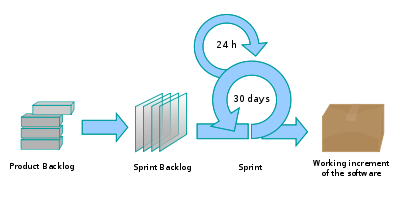
Are you Agile?

agileIf you work in any industry or administration that uses IT to support its business (i.e. any of them) and your IT department hasn’t yet spoken to you about Agile development methodologies, you should certainly question why?

If they have, you’re probably confused with some of the concepts and all of its geek terminology. This short post aims to help you approach this promising way to incrementally develop new software. Agile development methodologies like Scrum structure some of the prototyping approaches we’ve used since quite a long time.

http://blogs.orange-business.com/live/2009/09/are-u-agile.html

And last week’s Agile 2009 conference featured a milestone in the project management profession: the formal launch of the PMI Agile community…
http://www.jessefewell.com/2009/09/04/agile-2009-and-pmi/

The project manager: Optimist AND Pessimist

Let’s consider some of the advantages and inconveniences to be optimist or pessimist.

The optimist is contagious, demonstrates trust in himself and others, generates the desire to move, to progress things, gives energy and incites us to look for solutions and opportunities, rather than problems. However, optimism can lead to excess confidence and even to under estimate obstacles. It also lends to painting things under a too much favorable eye.

The pessimist survives (according to Jack Welch: « Only the Paranoid survive »). He is attentive to potential risks and always ready to face problems. However he may be paralyzed by his analysis of the situation. He portrays a negative image of himself and his project and could repulse even the best wills (nobody likes coming to see a gloomy face). He may also may overspend to cover perceived risks.

In practice, isn’t it the combination of both facets, optimism and pessimism, that is necessary to the project manager if he/she succeeds in accumulating the key points of both attitudes while avoiding weaknesses?

Optimism

Pessimism

ContagiousDemonstrating self-confidence and trust others

Generating the desire to move, to progress things, giving energy

Inciting to see and to look for solutions and opportunities, rather than problems

Ensuring survival (according to Jack Welch: « Only the Paranoid survive »)

Awakening our attention to potential risks

Preparing us to face problems

chef de projet = Optimiste ET Pessimiste

Considérons ces quelques avantages et inconvénients à être optimiste ou pessimiste.

L’optimiste démontre sa confiance en lui-même et dans les autres, créée le désir de bouger, de faire avancer les choses, donne de l’énergie. Il nous incite à voir et rechercher des solutions, des opportunités, plutôt que des problèmes. Cependant, l’optimiste peut faire preuve d’excès de confiance, voire sous estimer les obstacles. Il tend également à peindre les choses sous un œil un peu trop favorable.

Le pessimiste assure sa survie (selon Jack Welch: « Only the Paranoid survive ») car il est attentif aux risques potentiels et toujours prêt à affronter les problèmes. Par contre, il peut être paralysé par son analyse de la situation et il projette une image négative de lui même et de son projet susceptible de repousser même les meilleures volontés (personne n’aime venir le voir car il est morose). Il risque également de trop dépenser pour couvrir les risques qu’il perçoit.

En pratique, n’est-ce pas la combinaison des deux facettes, optimisme et pessimisme, qui est nécessaire au chef de projet si il/elle parvient à cumuler les points forts de chaque attitude tout en évitant les points faibles?

Optimisme

Pessimisme

contagieux

démontrant une confiance en soi et en les autres

générant le désir de bouger, de faire avancer les choses, donnant de l’énergie

incitant à voir et chercher des solutions, des opportunités, plutôt que des problèmes

permettant d’assurer la survie (selon Jack Welch: « Only the Paranoid survive »)

éveillant notre attention aux risques potentiels

nous préparant à affronter les problèmes

tips to get the best of your project management training (and any other class)

formationI suggest in this note looking closely at the ways each of us could improve the effectiveness of the trainings in which we get the chance to participate. This is only a personal return of experience and I encourage you to enrich it with your comments.

An approach in three points: 1. Before, 2. During and 3. After the training.

1. Before: a large part of the success resides in the preparation

This phase of preparation is indeed critical as in any project. First of all, let’s address some relatively simple questions:

  • What would I like to learn?

It is necessary to try to be as precise as possible (taking into account the fact that it is difficult to have certainties on a subject which we do not know yet). If we go on training, it is generally to discover a new domain, acquire or perfect a skill, learn to use new tools, processes or methods…

  • Why? And am I ready?

What are my motivations for this training? Will it be really useful in a relatively close future? Personally, I avoid any specialized training which I cannot put into practice in the coming 3 months. It also allows me to start to prepare the « post training » phase.

a vos marquesOther important criterion: pre-requisites. Do I have the experience and the necessary knowledge so that this learning can be beneficial? If I attend an advanced class of preparation for the PMP® certification without the required experience (3 years minimum as a PM) and without having done the preliminary classes, there is a strong risk that it’ll be of little value.

PretConsidering my workload, is the timing convenient to undertake this training course? I had the chance to follow several intense education programs (several months long): IT consulting university, preparation for the PMP® certification, Intrapreneurship University. All three were very dense and demanding with long periods out of the office and far away from home. With on top of it, personal work I had to provide between the classes of the programme, and requiring availability and concentration. If I engage in a long cursus: will my family bear with me?

  • Will my boss support me in this education?

chiefLet’s not waste time pointlessly seeking classes which would not be approved (unless you have decided to pay from your own pocket or to use your DIF for the French people). Of course, my ability to convince can be essential as well as my positioning of the training in a logical manner with regard to my job and ambitions. But, the budgets are not extensible and some classes very expensive in cost and at time: so, do not jump this step. Will my boss be ready to help me to put into practice what I will learn: new tasks, responsibilities or projects, with coaching (by him or others), by giving me some time to prepare for the certification …

  • What are the classes which can address your expectations?

questionDiverse vectors of research are to be used: the human resources department of the company, colleagues, manager, the Internet and especially professional forums and blogs, the training companies and bodies… For larger studies, it is also interesting to take into account: the reputation of the provider and of its education programme, the trainer (a lot of information on internet if you succeed in obtaining a name). For example, some trainers for the PMP® Exam preparation have a success rate of their students that is close to 100 %. Select these!

2. During the class: focus and concentration

That’s it, I am there, the long awaited class is starting.

  • The logistics

no phoneI cut the telephone, emails, and I took my precautions to avoid any non-absolutely critical interrupt. The periods of training are rare enough that we take advantage of these well by dedicating ourselves 100 %. I thus made sure that all those who could need to join me as a matter of urgency know who to contact in my place or at what time I shall be contactable. Personally, I try to set time slots to read urgent emails, check the answering machine and SMS in an asynchronous mode (i.e. when it is the best moment for me) and I stick to these.

  • The contents

I try hard to mentally apply what I learn in the class to concrete situations of my professional and personal life. Very often, it allows to memorize better and to verify my understanding. For example, when I attended the training courses preparing for the Project Management Professional PMP® certification, I had already quite a lot of experience in project management and several active projects. When we approached a new PMI® domain of competence with techniques relating to it, I tried to identify a project on which I thought I had observed (or applied) good practices on the topic and another one where things did not go so well. These reference points allowed me to very quickly associate the theory with practical experience and try to understand why I had experienced success or difficulties.

  • an open mind

It is not rare during classes to learn things which we did not expect: what you will retain may not always be directly the purpose of the training. For example, it is frequent to meet people for the first time and have to practice exercises in small team with them. It can be with persons coming from other countries, cultures, professions, experiences… During a class about the methods to elaborate of a business plan, I learned how to undermine some conflicts that arise during the building of a team thanks to objectives alignment and dialogue. It was not directly what I expected to learn from the class, but it turned out to be very valuable upon return in my day to day job and also to take on new responsibilities!

3. After: how to really benefit

We learnt, now we need to practice this fresh knowledge so that it becomes a real competence.

  • The practice

practiceIt is necessary to create for ourselves opportunities to practice what we recently acquired. Otherwise we’ll very rapidly forget it. If the initial preparation stage prior to the course was well followed, I have defined my motivations for this training and convinced my boss to invest in me. It is necessary upon my return to review this list of motivations and to turn it into a list of concrete objectives to implement in order to really master the new skill. For example, if I attended a class on risk management, I will commit upon return to revise within a couple of weeks the risk analysis of my main project (in the lights of the new methodology) and to produce corresponding deliverables: risks register, risk evaluation, priorities, risk management plan, method for periodic control … If it was a course on the presentation skills, I try to create an opportunity in the month to come to deliver a presentation to a wide audience…

  • Personal work

It is rather rare that a class will provide all methods, techniques, know-how. On the other hand, I now have pointers, vocabulary, basic skills to go further (books, studies, web sites). If the subject is of real interest to me, I will follow up on evolutions. For example, the project managers certified before 2009 will study the changes brought by PMI in the new version of the PMBOK standard. They will join forums and blogs on the topic. They’ll follow the evolutions of the domain … If my boss accepted to coach me or to provide me with an experienced coach, I’ll establish concrete objectives with him.

  • The network

networkI met new persons (including the trainer). Some of them very interesting and with whom I have discovered affinities. I’ll keep in touch. I’ll send them a message after the class, suggest remaining connected via a professional network (Linkedin, Viadeo or others), send them regularly some news about me and interesting articles on the subject we studied together, if possible I’ll organizing meetings to keep the link alive…

As indicated in the introduction, this is only my personal return of experience and I encourage you to enrich it with your comments.

astuces pour tirer le meilleur de vos formations en management de projet (et autres cours)

formation

Je me propose dans ce billet de regarder de plus prés la manière dont chacun d’entre nous pourrait améliorer l’efficacité des formations auxquelles il/elle a la chance de participer. Il ne s’agit que d’un retour d’expérience personnel que je vous invite à enrichir de vos commentaires.

Une approche en trois temps, Avant, Pendant et Après la formation.

1. Avant: Une grande partie du succès réside dans la préparation

Cette phase de préparation est en effet cruciale comme dans tout projet. Il s’agit tout d’abord de se poser quelques questions relativement simples:

  • Que voudrais-je apprendre?

Il faut ici s’efforcer d’être le plus précis possible compte tenu du fait qu’il est difficile d’avoir des certitudes sur un sujet que nous ne connaissons pas ou pas suffisamment. Si nous allons en formation, c’est généralement pour découvrir un nouveau domaine, acquérir ou perfectionner une compétence, apprendre à se servir de nouveaux outils, processus ou méthodes…

  • Pourquoi? et suis-je prêt?

a vos marquesQuelles sont mes motivations pour cette formation? Me sera-t-elle réellement utile dans un futur relativement proche? Personnellement, j’évite toute formation spécialisée dont je ne pense pas pouvoir utiliser les enseignements dans les 3 mois. Cette réflexion permet également de préparer l’ « Après formation ».

Autre critère important: les pré-requis. Ai-je l’expérience et les connaissances nécessaires pour que ce cours soit profitable? Aller à un cours avancé de préparation à l’examen PMP® sans avoir l’expérience requise (3 ans de PM minimum) et sans avoir suivi les formations préalables risque fort de n’être que de peu d’utilité.

pretLe moment est-il propice compte tenu de ma charge de travail pour suivre cette formation? J’ai eu la chance de participer à plusieurs programmes musclés de formation sur plusieurs mois : école de consulting informatique, préparation au PMP®, Intrapreneurship University. Les trois furent très intenses et exigeants avec des  périodes de plusieurs semaines hors du bureau et loin de la maison. Avec en sus, du travail personnel et d’équipe à réaliser entre les étapes de la formation et exigeant une disponibilité d’esprit et de concentration. Une question à se poser pour une  formation longue: Ma famille me supportera-t-elle?

  • Mon supérieur me supportera-t-il dans cette formation?

Ne perdons pas de temps à rechercher inutilement des formations qui vont être refusées (à moins que vous ne soyez décidés à les financer de votre poche ou à utiliser votre DIF pour les Français).

chiefBien sûr, mon habileté à convaincre peut être primordiale ainsi que ma capacité à bien positionner la formation de manière logique par rapport à mon job et mes ambitions. Mais, les budgets n’étant pas extensibles et certaines formations très chères en argent et en temps.

Autre aspect, mon boss sera-t-il  prêt à m’aider à mettre en pratique ce que j’aurais appris : par de nouvelles tâches, responsabilités ou projets, en me « coachant » (ou identifiant un coach), en me donnant du temps pour préparer une certification…

  • Quelles sont les formations qui peuvent répondre à cette attente?

questionDivers vecteurs de recherche sont à exploiter: le département ressources humaines de l’entreprise, les collègues, le manager, le web avec en particulier les forums et blogs professionnels, les organismes de formation… Il est également intéressant de prendre en compte pour des formations supérieures ou plus longues : la réputation de l’organisme et du cursus de formation, le formateur (beaucoup d’infos sur internet si vous parvenez à obtenir son nom). Par exemples, certains formateurs à l’examen PMP® atteignent des taux de réussite de leurs élèves qui frisent les 100%. Autant choisir ceux-là!

2. Pendant: focus et concentration

Ça y est, nous y sommes, la formation tant attendue débute.

  • la logistique

no phoneJe coupe le téléphone, les emails, et je prends mes précautions pour éviter toute interruption non réellement critique. Les périodes de formation sont suffisamment rares pour bien en profiter en s’y consacrant à 100%. Je m’assure donc que tous ceux qui peuvent avoir besoin de me joindre en urgence sachent qui joindre à ma place ou à quelle heure je serai joignable. Je me définis des créneaux pour vérifier de manière asynchrone (quand c’est le bon moment pour moi) les emails, répondeurs téléphoniques, SMS… et je n’en déroge pas.

  • le contenu

Je m’efforce de faire le parallèle entre ce que j’apprends et des situations concrètes de ma vie professionnelle et personnelle. Cela me permet très souvent de mieux mémoriser et de valider ma compréhension. Par exemple, lorsque j’ai suivi les formations préparant à la certification Project Management Professional PMP®, j’avais déjà pas mal d’expérience de management de projet et plusieurs projets en cours. Lorsque nous abordions un nouveau domaine de compétence de PMI® avec ses techniques et outils, je réfléchissais à un projet sur lequel je pensais avoir observé (ou exécuté) de bonnes pratiques sur le sujet et un autre où les choses s’étaient moins bien passées. Ces points de références me permettaient d’associer très rapidement la théorie du cours avec mon expérience pratique et essayer de mieux comprendre les raisons de ces succès ou difficultés.

  • l’ouverture d’esprit

Il n’est pas rare lors de formations d’apprendre des choses auxquelles on ne s’attendait pas: Ce que je retiens n’est peut-être pas directement l’objet de la formation. Par exemple, il est fréquent de rencontrer en formation des personnes que l’on ne connaît absolument pas et de devoir réaliser des exercices en petites équipes. Il y a souvent des personnes provenant d’autres pays, cultures, métiers, expériences… Lors d’une formation sur les méthodes de préparation d’un business plan, j’ai pu apprendre à déminer certains conflits qui surviennent lors de la création d’une équipe grâce à l’alignement des objectifs de chacun et le dialogue. Ce n’était pas directement ce que je m’attendais à apprendre, mais cela s’est avéré extrêmement utile de retour dans mon job et pour prendre de nouvelles responsabilités!

3. Après: en tirer les bénéfices

Nous avons appris, maintenant appliquons ce nouveau savoir pour que cela devienne une réelle compétence.

  • la pratique

practiceIl faut se créer les opportunités de pratiquer ce que nous avons récemment acquis sous peine de l’oublier très rapidement. Si l’étape de préparation a bien été suivie, j’ai défini mes motivations pour cette formation et convaincu mon chef d’investir sur moi. Il est nécessaire au retour de formation de reprendre cette liste de motivations et d’en faire une liste d’objectifs concrets à mettre en œuvre pour réellement maîtriser cette nouvelle compétence. Par exemple, si j’ai assisté à un cours sur le management des risques, je m’engage au retour à revoir sous quinzaine l’étude des risques de mon projet principal aux lumières de la nouvelle méthodologie et de produire les livrables correspondants: registre des risques, évaluation, priorités, plan de management, méthode de suivi périodique… Si c’était un cours sur les techniques de présentation, j’essaierai de me créer une opportunité de présenter à une large audience dans le mois qui suit…

  • le travail personnel

Il est assez rare qu’une formation donne toutes les méthodes, techniques, savoir-faire. Par contre, j’ai maintenant les pointeurs, le vocabulaire, les compétences de base pour aller plus loin (livres, études, sites internet…). Si le sujet m’intéresse réellement, je peux rester informé des évolutions. Par exemple, les chefs de projet certifiés avant 2009 étudieront les changements apportés par PMI dans la nouvelle version du standard PMBOK. Participeront aux forums et blogs sur le sujet. Suivront les évolutions du domaine… Si mon supérieur a accepté de me « coacher » ou de me fournir un coach expérimenté, je vais établir des objectifs concrets avec lui.

  • le réseau

networkJ’ai rencontré de nouvelles personnes (dont le formateur). Certaines très intéressantes et avec lesquelles j’ai des affinités. Je garde le contact. J’envoie un message après le cours à ces personnes, suggérant de rester connectés sur un réseau professionnel (Linkedin, Viadeo ou autres), j’envoie régulièrement de mes nouvelles et des articles intéressants sur le sujet étudié ensemble, si possible j’organise des rencontres pour garder le lien…

Comme indiqué en introduction, il ne s’agit ici que de mon retour personnel d’expérience que je vous invite à enrichir de vos commentaires.

7 attributes of leadership for the project manager

logo PMI France SudI have been privileged, thanks to my activities within the professional association PMI® during 15+ years and my professional activities since 30 years, to meet many project managers in France and abroad.

7 Attributes of Leadership in PMI have been so often asked « why are some project managers considered as administrators of projects while others were real leaders? » that I decided to study this topic. I read numerous articles, notably from PMI® and also from Prince2® and Agile, I discussed with project managers and experimented managers. I gave presentations and facilitated workshops on this subject in many professional PMI forums in France and Europe. Every time, more than the presentation itself, it was the debate with novice and experienced project managers that was the most interesting part and allowed me to further enrich my ideas.

I tried to synthesize those attitudes, qualities and characteristics which I could identify in the most brilliant of the project managers I know. I summed them up in 7 main attributes which make exceptional leaders in Project Management.

I am commenting on these attributes in this rather long post on the subject:

  1. Know how to communicate a clear vision
  2. Maintain a balance
  3. Learn to trust your instinct
  4. Enthusiasm, to inspire your team members
  5. Show respect
  6. Dare to persevere even in the adversity
  7. Know when to change and quickly adapt

Ablog post is less adapted to interactive discussions than live forums and I nevertheless encourage you to react and share with me your own experience.

1. Know how to communicate a clear vision

  • Have a clear vision
  • Deeply understand the objectives
  • Synthesize them
  • Adapt the vision to each person
  • Keep it simple and very concise

Vision Road Sign with dramatic blue sky and clouds.How could we communicate clearly if we do not have a very clear vision of the project? It is critical to grasp and integrate all the objectives of the project: financial, professional, technical, human, process, strategic, tactical … An exercise that is both complex and necessary. As long as we do not understand in the details the objectives of the project, we cannot synthesize and explain them in a simple and understandable way.

Furthermore, the communication of the vision must be adapted to each interlocutor:
  • The technical team,
  • The future users of the project’s deliverables,
  • The sponsors and Other stakeholders,
  • Etc.

All may have different and nevertheless very justifiable expectations from the project. It is necessary to deliver this communication in an extremely precise, simple and concise way not to lose his interlocutors in a vague hubbub.

It is easier to say that to do… Nevertheless I have seen it executed with virtuosity on several projects and witnessed complete failure on others.

One of these successes was a project of deployment of a financial and logistic system. The synthetic vision was that this project was going to allow the whole company to share a unique truth on its accounts across the world, at every hierarchical level, and for each of the divisions and product lines.

The communication per type of interlocutor integrated this core message and added to it messages tailored to the interlocutors:
  • communiquer vers le hautFor the technicians, the fact that we were migrating towards a leading software package in the industry (Oracle eBusiness suite not to mention it),
  • For the finance guys, a centralized consolidated database together with the adoption the best processes in every finance organization of our company across the world,
  • For the decision-makers, dashboards containing indisputable figures, access to the data via queries and a reporting environment,
  • For the end-users, training courses, a homogeneous, ergonomic and functional user interface, with detailed processes on-line.
The second example is in fact a counter-example.
field engineer

Our objective was to implement an automated dispatching system of field interventions on electronic equipments to our support technicians. The message was clear: the solution, through routes optimization, will increase customer satisfaction and productivity. The message retained by the ground was only the increase of productivity. This one was quickly translated into increase of workload, risk of job cuts, and less autonomy for the interested party, the technicians, in the choice of which incidents to handle next. And, it is precisely these technicians who could make the project a success or a failure. Thus, we had a poor communication of the vision towards the technicians. Furthermore, the people in charge of customer accounts who would easily have understood and known how to explain benefits to their customers were forgotten from the communications. After a very successful initial period of tests in real situation arose the inevitable first problems. The account managers supported the complaints of the technicians. This resulted in a pure and simple decision to kill the project.

The project manager needs to acquire or grow this capacity to know how to communicate a clear vision and, also, not to miss anybody in the communication, in order to increase his leadership

2. Maintain a balance

  • Objectives and motivation of the team
  • Listening and discipline of execution
  • Sponsors desires and ground realities
  • Risk-taking and security
  • Attention to details and global view
  • Perseverance and flexibility

The project manager is subjected to permanent and sometimes divergent pressure from his customers, team members and sponsors. It is difficult to him(her) to find the happy balance between the necessary realization of the objectives of the project and the motivation of his(her) team. Listening to the members of the team is important and necessary and has to be accompanied by a firm discipline in the execution of tasks and achievement of the milestones of the project. It is thus necessary to discuss, to listen to and to explain (again and again) while maintaining the pressure to obtain the expected results. Passing milestones, production of intermediate / partial deliverables, sharing of positive feedback from the steering committee are as many opportunities to be leveraged to motivate the team by celebrating these results.

management des risquesWe often walk a tightrope between the satisfaction of the desires of our customers and our understanding (and that of our teams) of what is feasible or not. The compromises are numerous during a big project to find the fine balance between desire and reality.

On the other hand, I was able to notice that organizations have different levels of tolerance to risks in general and towards some in particular (environmental, legal, safety). Naturally, it is going to influence the approach in risk management and steer us towards either solutions of avoidance, or mitigation plans, or insurances, or transfers of responsibility when feasible. And in each case, we need to adapt the answer to the impact and to the probability that the risk could materialize.

A concrete example was reported to me by the project manager of the construction of the rail cabs in two big cities in France.

This project manager explained that he had adopted diametrically opposed approaches in the communication and realization of these two undertakings. In one of the cities, the main sponsor was extremely resolute to go fast. His reasoning was that regardless the dialogue and communication, the construction of the rail cab was going to be painful for the local residents and storekeepers. Thus, he’d better go fast and pass this difficult stage as quickly as possible. In other city, the sponsor was persuaded that the dialogue was imperative, that it was necessary to take time for discussion, to take into account the remarks… Naturally, the second project took 4 or 5 times longer than the first one. But, should it be considered a failure? Maybe not for the city in question, but the sponsor of the second city is not longer in position to appreciate the outcomes …

résultats à long termeAlso, it will be necessary to pay very high attention to details while keeping a little distance to maintain a global view of the project and its final objectives. Not always easy to raise our eyes towards the horizon when the daily tasks monopolize us.

And to complete this subject of the necessity to maintain a balance, I would mention a point which I find particularly difficult to manage: perseverance.

Perseverance is very certainly one of the major qualities asked of the project manager. He has an objective to achieve and has to try hard to eliminate any obstacle preventing him from reaching it in time and on budget. Nevertheless, things changes all the time around us and in the project in particular. Change management requires rigor and also flexibility to avoid extremism and yet deliver the best product or the service possible to the customers.

3. Learn to trust your instinct

  • Not enough data
  • Too much data
  • The detailed analysis provides several options
  • The situation calls for an innovative approach
  • Necessity of fast decision-making
The vast majority of the project managers I work with are Cartesian, logical, and pragmatic.

It may be due to the fact that I evolve in a world largely populated with engineers and technicians. However reasoned we may be, we often feel a chill, an instinctive reaction which warns us of danger. It is possible that unconsciously a situation reminds us of another one. Let us take the time to listen to these messages and to decode them before deciding to integrate them or not into the decision.


Image courtesy of stockimages] / FreeDigitalPhotos.net

More concretely, it is frequent that we do not have enough data to make a really informed decision based on certainties. In other cases, it is the overload of data that kills the information and we are flooded under the mass. At other times, the consultants or the experts who studied the subject do not succeed in identifying a best option among those that they studied, or do not manage to agree on a common recommendation.

It happens frequently enough that the project, which according to PMI® « is a temporary endeavor undertaken to create a unique product or service.”, is very precisely unique and requires achieving something never done before. Only an innovative approach will permit to reach the objective. The experience and the reasoning by analogy will not be of great help.

On top of this, certain decisions cannot be postponed.

big clock train stationWe can be in a situation where we have to decide before midnight if we backtrack in the installation of the new version of the software (that is taking longer than planned) or continue (at the risk of no-return solution in due time). We can have a limited window of opportunity. For example, have to launch the project operational on January 1st or postpone it by several months or even cancel it altogether if we are not ready on time.

4. Enthusiasm, to inspire your team members

  • Trust the team
  • Delegate real responsibilities
  • Belonging and loyalty to the project
  • Know yourself ( personal style)
  • Globalize your approach
  • Lead by example
Trust the team. Confidence in others.

confianceIt is almost impossible to create a reliable climate without demonstrating every day your confidence in the team, in its members and in our capacity to make together the project a success. It is often easier as a first reaction not to trust. We may wish to take back a task previously allocated to someone because his first deliverables are not matching what we expected in terms of contents, quality or duration. We can be tempted to request heavy and\or too frequent reporting. We can even simply stretch out excessively the duration of certain tasks for a given person due to a lack of confidence in his capabilities … However, the slightest error is fatal. The lack of trust will be perceived by the interested party and by his team-mates. It takes a lot of time to gain trust and only seconds to lose it.

The following topic in this same subject is delegation.

TeamThis one is all the more difficult when the project manager is himself an expert of the domain and capable of executing perfectly the task he delegates. It also may happen that a task appears so important to us that we think we cannot possibly delegate it. The leader will start by surrounding himself with good skills, better than his own as much as possible. He will attempt to develop the resources which are entrusted to him through giving them difficult, critical, complex assignments and by providing them the necessary support to succeed. I have been favored to work with some great leaders and it always was a pleasure to learn and to grow next to them. All had very different styles but in common this capacity to trust you. A trust you do not want to disappoint.

It is also true that we cannot on one hand « bad mouth » the project and on the other ask team members to go out of their ways to deliver an excellent product in due time. It seems evident, and nevertheless … This commitment to the project can begin with quite simple things such as the signature at the bottom of your emails which will indicate clearly your belonging to the project, the message on your answering machine ( » here Pierre, leader of the project X within the division Y of Z « ), the positive comments at the coffee machine, the well prepared elevator speech that will not miss to praise the project in response to the classic question about your job …

There is also a notion of authenticity in leaders: to be conscious of your style, your personality is very important.
"Image courtesy of Stuart Miles / FreeDigitalPhotos.net"
« Image courtesy of Stuart Miles / FreeDigitalPhotos.net »

I explain. Are you rather directive, consensual, paternalistic, action oriented? In my personal case, I am very action oriented and I have a rather participative / cooperative style. When I involuntarily fell over under the pressure towards a more directive and cutting style, it was a fiasco. Even more badly perceived that I did not feel at ease in this operating mode and that this change was thus very badly lived: a lack of authenticity. On the other side, I had the opportunity to work with some very directive bosses. And it was not really raising issues for the team because they knew very well what to expect upfront.

Globalize your approach.

I work since ever it seems to me in an international environment. The teams are geographically distributed, the customers also. We use English as common working language with naturally quite important disparities in the level of practice of the language. We come from different cultures: Latin, Anglo-Saxon, Indian, Cairo, Japanese … When we evolve in such an environment, it is necessary to think global and to take into account the local differences which can lead to very different results for a same activity.

jardin japonaisFor example, during my first professional visit to Japan, I have very stupidly (but I learned it only later) tried to conduct with my Japanese colleagues the same session of brainstorming as realized with a lot of success in Europe and in North America. Complete disaster! After a course upon my return about the Japanese culture, I was able to appreciate not only my error but also the very uncomfortable situation in which I had involuntarily placed my colleagues (my apologies again, Hiroshi-San). I had happily asked at a common session and without preparation to persons of very different hierarchical levels to exchange openly on their ideas. I went against their very mode of operation as teams where they try to understand/test in small touches the positions of each other before softly pushing ideas. Nothing is innate in this domain of intercultural work and nothing is ever acquired. It is necessary to constantly keep it in mind.

reflectI had on the last point, « to lead by example », animated discussions with some project managers. I shall let you be your own judges. Personally, I sincerely think that the leader project manager has to lead by example.

I push the ball a little further in workshops in front of professionals by saying: first arrived, last to leave, always open and happy, hard at work, positive … Naturally, it is not only the number of hours which count, but it is also what we put inside: the intensity. Nevertheless, all the great leaders whom I worked with in the field of project management are hard at work and volunteer. They are open and approachable. They have faith in the future.

5. Show respect

  • Learn to listen
  • Proximity
  • Honesty and fairness
  • Provide opportunities to team members
  • Recognize own limits and ask advice from experts
The respect begins in my opinion by listening.

I know project managers who speak all the time. It is very true that communication is a major part of our job and it is also true that communication is bidirectional. It is necessary to stop speaking from time to time to be able to listen to others, to verify that the message was received and understood. To remain silent is not enough: the project managers not only has to listen to but also look for the dialogue, arouse comments, look for the criticisms and value the ideas of his interlocutors. Numerous leaders succeed in strengthening their efficiency by their capacity to listen and to ask the right questions. It may even be their key strength.

To receive true and sincere comments, it is necessary to establish a relation of proximity (and of trust)…

the opening…with his team and customers, particularly in the case of geographically distributed teams. The « open door » attitude and the management by « wandering around » are particularly effective. Cooperative tools can reproduce at distance a certain level openness and even create proximity: instant messaging, Twitter, LinkedIn, blogs …

On the other hand, to monopolize the successes of others cannot be a proof of leadership and will not lead the project manager very far. On the contrary, to recognize the contributions of each and advertise it is very welcome. Additionally, it is necessary to facilitate the development of the people entrusted to us for the duration of a project by giving them tasks which challenge their abilities. These will always benefit to the company in due time, on this project or following ones. Additionally, to help to build their reputation will facilitate at the end of project their transition to their next challenge.

Finally, we cannot be expert in all trades and should not even attempt to become. To know how to attract good skilled people is the strength of all leaders and the project managers in particular.

6. Dare to persevere even in adversity

  • We cannot always please everybody
  • Understand the position of opponents and partners
  • Remain constructive
  • Keep up
Project manager’s role sometimes appears thankless.
seul au monde
Feeling alone…

In particular to those whose engine is the recognition and the appreciation of others. Indeed, to produce in due time quality deliverables and under constrained costs requires decisions not always appreciated by all. The technician of the team may have difficulty in accepting that we do not use the latest version of the database engine. The customer will be tempted to add requirements along the way without taking the time to fully specify them and expecting no impact on costs and timing. The sponsor can at the same time reduce the budget, refuse any compromise on the launch date and reject risk-taking or perimeter reductions. So many examples lived by many of us and this almost daily. Thus, there will inevitably be compromises to find and not everybody will see his dreams become reality.

One of my first managers when I started as software developer used to tell our customers:  » it is simple, we have 3 parameters: time, contents and costs. Pick 2 and leave me free on the third one ». A little bit extreme, but there is a lot of truth in this very simple and direct message. We cannot always win on all boards. It is important for the project manager to understand indeed on which axis he can eventually expect some flexibility.

What motivates your stakeholders to support you and your project?

la motivationAn English consultant with whom I worked for several years had a very sharp sense of politics in his most interesting meaning for us as project managers. He always asked the question (and often out at loud so that I could benefit from his experience): « What could Mr or Mrs X gain in helping us to make this project a success? ». This voluntarily positive attitude in the search of how to sell the project to such or such person was very useful in the numerous countries and organizations we worked with. The corollary « what could Mr or Mrs. X be afraid of or have to lose because of the project «  is also interesting to work on your selling arguments. (Thank you for your numerous advices Ralph)

Remaining constructive at all times.
"Image courtesy of pakorn / FreeDigitalPhotos.net"
« Image courtesy of pakorn at FreeDigitalPhotos.net »

A project is rarely a long and quiet river. Hurdles will be numerous and the tough passages also. When things are going well, it is easy to be positive and constructive. But it is when they harden and do not go as we wish that it is most important for the leader to keep in mind that his attitude is observed and is essential for the members of the team. He cannot give up, or let go some pessimistic comments … It is his constructive strength that will step by step, stone after stone, help the project team to progress towards satisfactory if not ideal solutions.

Finally, the road is long towards the success of the project. As for a marathon, it is necessary to get ready for the inevitable difficulties, not to run out of juice by throwing all our strengths in the beginning of race, to find the good rhythm and to keep it up until the final straight line where it will again be necessary to accelerate if we have some strength left. It is necessary to run the full distance!

7. Know how to change and quickly adapt

  • Keep listening to the environment
  • Think off the beaten track
  • Look for the differences
  • Learn from others
  • Accept unavoidable changes
Image courtesy of Manostphoto at FreeDigitalPhotos.net

The concentration, necessary for the project manager to drive his project and reach the objectives, needs not to isolate him and prevent him from listening. In particular, it is necessary to remain informed of what is happening outside our ecosystem: project, company, customers, partners, team members …

Some events external to the project can have important impacts on this one.

The recent « sub primes » crisis can be an example. The vote of a new law, the emerging of a new technology, a new competitor unheard of before, the arrival of new shareholders, changes in the executive management… the list is endless.

Additionally, it is necessary to constantly look for novelty and as often as possible outside our usual perimeter.

I advise you for example to follow on-line broadcasts of video recordings from TED, these events share some of the best ideas on the planet (Http://blog.ted.com/).

ted

It is not rare that a presentation on a subject that is totally foreign to me, allows me to establish a parallel with a situation which I meet or met. And, to find new ideas for solutions and new approaches which I would not have thought of. In the same vein, if you keep recruiting clones of your own person (similar environment, nationality, experience, school or culture), you are not likely to obtain many different perspectives. Thus, looking for difference, remaining curious of everything rather than specializing excessively, are good tracks to increase your project management leadership.

Finally, one of the leaders of a big multinational for which I worked said: « If you see that something is inevitable, don’t fight it. Lead It! ». There are situations where perseverance, one of very qualities for which you were recruited, can play against you and your project.

It is probably the difference between stubbornness and tenacity …